TB-500 legal status: FDA documents
The consequential word in this file is “withdrawn”. It leaves a question about compounding access, with the safety rationale still on the page.
The Category 2 history
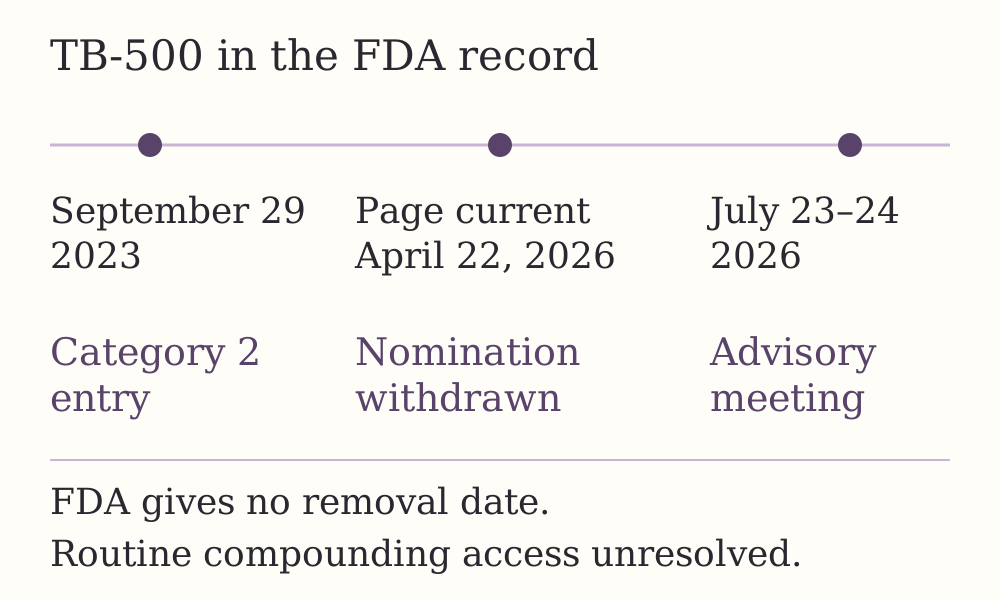
FDA placed the thymosin-beta-4 fragment also known as TB-500 in Category 2 on September 29, 2023. The category identified substances that may present significant safety risks. FDA cited possible immune reactions and insufficient safety information.
On FDA's page current as of April 22, 2026, the nomination is recorded as withdrawn. TB-500 is no longer in Category 2, and the agency retains its safety rationale. FDA publishes no date for that removal. The record checked in September 2026 leaves routine section 503A access unresolved.
I read “withdrawn” as an administrative status with an unanswered consequence. FDA has approved no therapeutic indication for TB-500. The withdrawal entry offers no affirmative authorisation for routine patient-specific compounding.
Advisory proceedings
The July 23–24, 2026 Pharmacy Compounding Advisory Committee agenda listed TB-500 free base and TB-500 acetate separately for consideration for the section 503A Bulks List. FDA staff argued against adding them. As of September 2026, the record available here contained no published committee vote; the compounding question remained open.
I would need the published outcome and the resulting FDA action before calling this question settled. An agenda establishes that an ingredient is under consideration. FDA’s bulk-substance framework explains the separate process leading to a final list.

Section 503A and section 503B
Section 503A concerns compounding for an identified patient, ordinarily with a valid prescription and the relevant state licensure. Section 503B concerns registered outsourcing facilities that can prepare larger batches for office use, subject to separate requirements. The FDA interim-policy guidance supplies the framework discussed here.
Bulk ingredients have their own eligibility requirements. A health review and prescription address one person’s care; ingredient eligibility remains another requirement. An ingredient may qualify through an applicable recognised monograph, use in an FDA-approved drug, or the final bulks list. For TB-500, the withdrawn nomination leaves the question described above.
On January 7, 2025, FDA stopped assigning numbered categories to new nominations. The analysis of the revised interim policies describes retained enforcement discretion for existing Category 1 substances and the absence of that reprieve for Category 2 substances. I see no affirmative authorisation for TB-500 in a change of nomination status. A final agency action matters more than an appealing interpretation of the category names.
Is TB-500 FDA approved?
TB-500 has no FDA-approved medical use. FDA’s safety entry for the fragment retains concerns about possible immunogenicity, an immune reaction to the material, and missing safety data. Compounding and approval are separate legal questions.
A change in how a health consultation happens, including a video visit, leaves the ingredient requirements in place under the compounding framework. This record provides no determination about an individual’s access, and I offer no personal legal or medical advice.
WADA and tested sport
The WADA Prohibited List prohibits TB-500 and thymosin beta-4 in and out of competition. Anti-doping laboratories have developed methods to identify the fragment and its breakdown products, including the assay in equine urine and plasma.
Some jurisdictions treat TB-500 as a prescription medicine, as the research record notes. This page’s FDA discussion concerns the United States. The sports prohibition has its own scope; a compounding argument supplies no exemption from it. The effects file puts these legal questions beside the recovery reports that often prompt them.